Seeing inside the body is only part of the challenge. Knowing where you are looking is the next part.
Imagine being handed a stack of photographs taken inside a house you have never visited. Each one shows you something. But without knowing which room each was taken in, or which way the camera was facing, it is hard to say how the pictures fit together. Real-time imaging, on its own, gives you the photographs. Spatial understanding is the floor plan.
This is the problem our team is working on, and it is one of the quieter reasons we believe a robot that moves matters.
Beyond the individual image
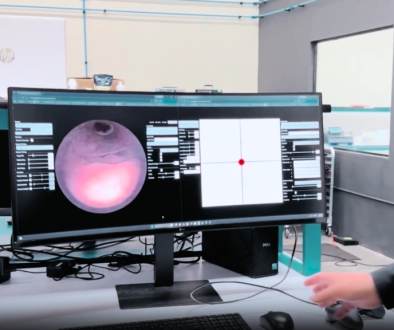
A live video feed from inside the body is remarkable. But a sequence of frames does not, by itself, describe how those frames relate to one another in space. Two views that look different might be a centimeter apart. Two that look similar might be on opposite walls.
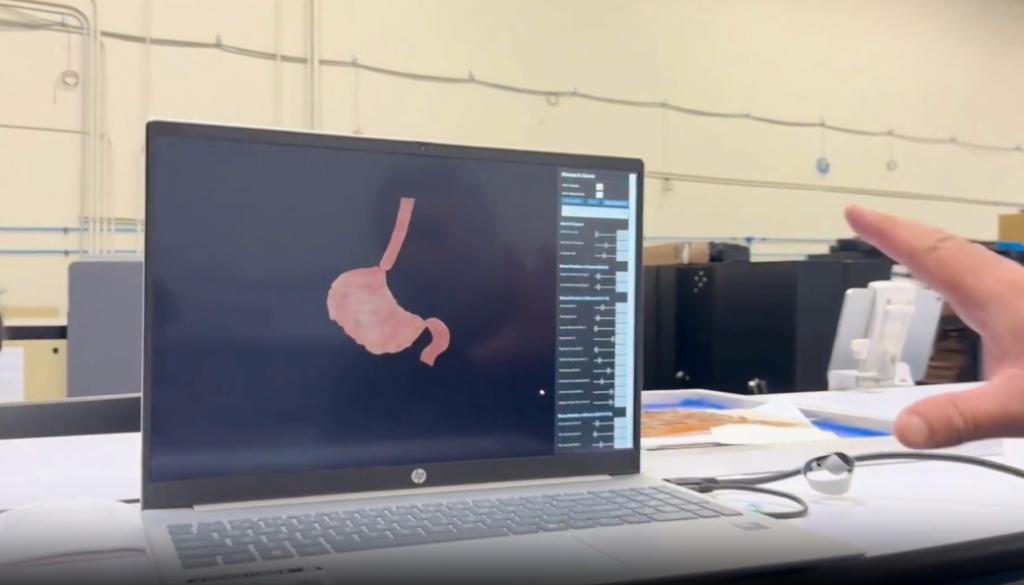
We are developing software intended to bring visual and spatial information together as our investigational robotic systems are designed to move through the stomach. The goal is to treat each frame not as an isolated picture but as a piece of evidence about a place.
Adding spatial context
Spatial context means connecting what a system sees with where that information was captured.
For a robot, that could mean relating changing visual information to the robot’s own movement over time. If the capsule turns, the view should turn with it. If it moves forward, things should zoom in and shift in predictable ways. Those relationships are effortless for a human brain and hard-won for a machine. Teasing them out of a stream of images from inside a space that is itself alive and moving is a research challenge we find fascinating.
Mapping over time
A moving robotic system encounters an environment from many positions and perspectives. As it moves, what it sees changes.
Stitching those observations together with spatial context could produce something richer than a video. We could create a connected picture of where views were captured and how they relate to one another. Over time, that could begin to look like a map. This remains an area of active development for us. We are not there yet. But it is the direction we are building toward.
Software matters too
It is tempting to think of swallowable robotics as a hardware story, and the hardware is heroic. But miniaturized hardware only makes the platform possible. Software is what could make it understand.
Imaging, movement and position all generate data. Something has to interpret it, organize it and make it useful. Developing software alongside the robot, rather than after it, lets us explore how those different streams of information could work together while the hardware is still taking shape.
There is another reason this matters to us. A physician’s attention is precious. We wonder whether a robot that kept track of where it had been might one day let more of that attention stay on the image itself. We do not know whether that idea holds, and we are not claiming it does. We think it is worth finding out.
Building a richer understanding
The long-term idea is simple to state. As a robot moves, it might be able to do more than capture disconnected views. It might come to know the space it is in.
Seeing is the beginning. Understanding where you are seeing from is the next engineering problem, and it is one we are glad to be working on.
Arman Nadershahi
CEO
Endiatx